
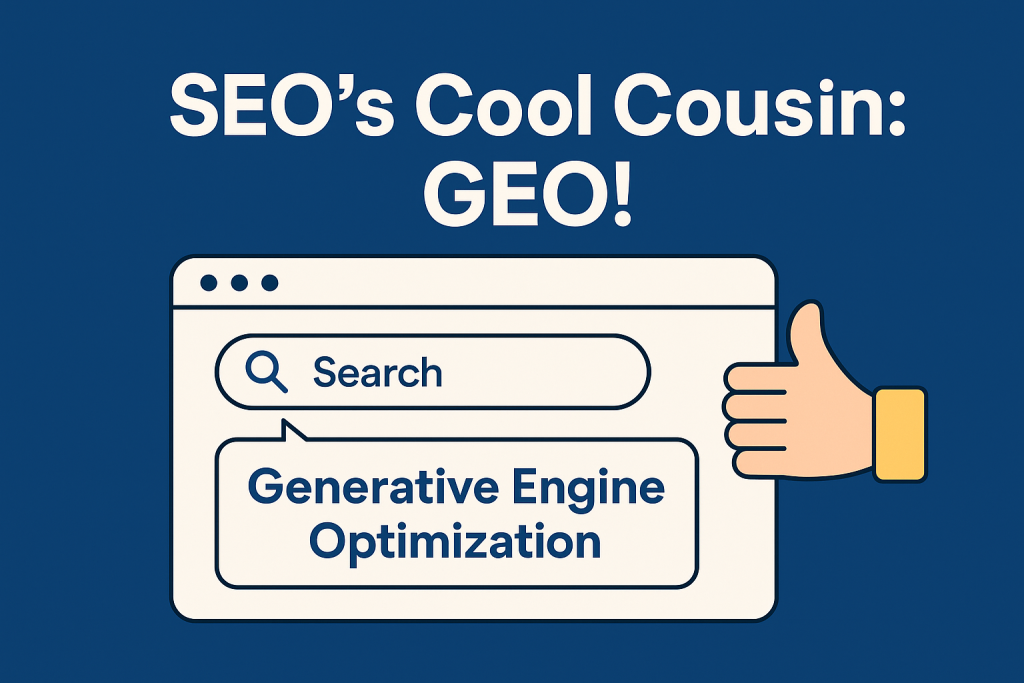
🎯 Ever Googled something and got a neat summary before you even clicked?
That’s generative AI at work—ChatGPT, Bard, Perplexity, and the like—spitting out direct answers instead of a list of links.
That paradigm shift poses a killer question for businesses: How do you get your content cited by AI bots instead of buried on page three?
Enter GEO—Generative Engine Optimization (thanks to the brilliant minds behind “GEO: Generative Engine Optimization” presented at KDD 2024) (Source: arxiv.org)
Here’s the skinny:
- Generative engines blend multiple sources into one concise answer (they don’t do “10 blue links” anymore). That’s genius for users, but bad news if you’re hunting clicks.
- GEO flips the script: it’s SEO’s fun cousin that optimises your content so generative AIs actually quote you.
- The researchers even built GEO‑bench (10,000 real-world queries!) and found GEO can boost visibility by up to 40% (Source: arxiv.org)
So, what lights GEO’s fire? 🌟
- Craft text so AI seems to love it—clear headings, Q&As, FAQs.
- Use inline citations, expert quotes, stats—AI bots favour trustworthy sources.
- Optimise structure and schema (like JSON‑LD FAQ).
- Keep content fresh, trust-authority high—and let bots crawl.
TL;DR: Traditional SEO is still great—but in the age of ChatGPT, your content needs to be conversation-ready. Think of GEO as AI search’s VIP pass.
P.S. If only it boosted my footy team’s rankings by 40%… 😆
Author Profile

- Dale Bothe is an Aussie entrepreneur and digital marketer with a passion for building websites that actually work. After launching and scaling multiple eCommerce brands, Dale now helps small businesses create no-stress websites that look great and drive results. When he's not behind the screen, he’s probably wrangling toddlers or tweaking the perfect Shopify layout for fun.
Latest entries
 Business TipsJuly 11, 2025Automated Email Flows: 15+ Brilliant Ways to Boost Sales & Save Time (2025)
 Business TipsJuly 4, 2025Top 21 Best Web Design Websites in Australia to Inspire Your Next Business Site
 Business TipsJune 21, 2025Why Are People Visiting My Website But Not Buying?
 Business TipsJune 20, 2025Why Meta Titles & Descriptions Matter (And How to Fix Yours Fast)